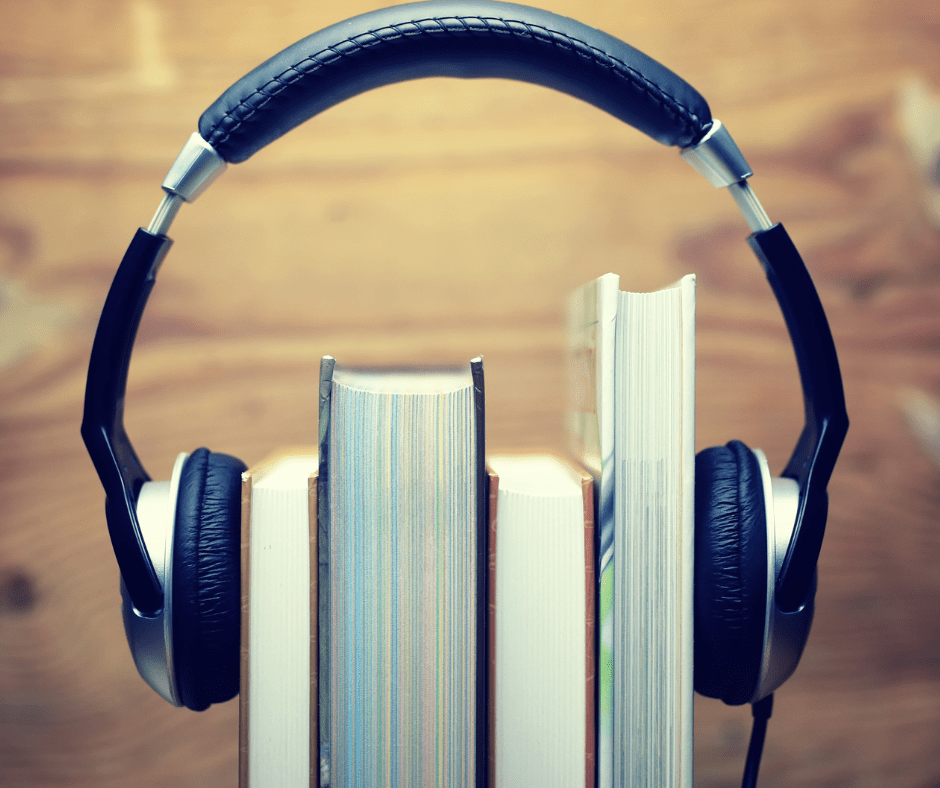
Listening to audiobooks is just like anything else—it is a skill that we can develop and practice. Some of us naturally learn audibly, but all of us can develop the skill further.
There are a few repeated complaints I hear from people who are hesitant to listen to audiobooks. Often, they don’t feel they retain the information. We’ll explore this further, but often the information is there—we just have to practice accessing it. Interestingly, research has shown that comprehension from audiobooks is quite similar to reading physical text. As Scientific American puts it: “Comprehension was similar across the listening and reading conditions.” That means listening isn’t a shortcut—it’s just a different path to the same destination.
Some feel they can read faster than they can listen. That may be true, but it’s hard to physically read while riding a bike or cooking dinner. Spending more time listening means you end up consuming more books overall. In fact, many people find they read far more books per year once they start listening.
Some are against audiobooks because they enjoy the feel and smell of a book as the pages turn through their hands. That’s fair—but listening to audiobooks does not mean you’re cheating on your library. Your book collection is not going to get jealous. It just means that driving, walking, and cleaning the house end up being more profitable and enjoyable.
For those who feel they have a hard time retaining information they learn audibly, I want to share some tips for exercising that skill. Throughout our years in school, we are required to physically read in order to answer questions. Every time we do this, we’re exercising our ability to grasp what we’re reading. During a lecture, we are encouraged to take notes, and in some cases answer questions, but these experiences are much more intermittent—and often we rely on our written notes in order to answer them.
During most of human history, average people—even those who could read—had no way of taking notes or writing anything down. When we hear of young Jewish boys memorizing the whole Pentateuch, along with many of the Psalms and other passages from Scripture, it seems incredible. Even more so when we realize they had no Bible of their own. They relied instead on listening, repeating aloud and in conversation, occasional reading, and meditating on what they had consumed.
This kind of active listening and repetition aligns with what modern learning science tells us: “Active recall and reflection significantly enhance comprehension and retention.” Pausing to think, discuss, or pray—as I’ll talk about later—isn’t just good spiritual practice; it’s a neurologically sound learning strategy.
In many ways, having written information readily at our disposal is actually damaging to our ability to memorize and exercise our brains. I remember when I had many phone numbers stored in my memory. Now, with a smartphone, I struggle to remember even my own number. It embarrasses me how long it takes to learn my way around a new city when I use a GPS instead of glancing at a map a few times. Audiobooks are a great way to exercise our memory—and, in the case of the Bible, a great way of consuming Scripture the way many received it in its own day.
The first advice I would give to someone who is new to audiobooks—or who has not enjoyed them in the past—is to start with highly entertaining books. Many people today treat fiction as though it is beneath them. Don’t make that mistake. If you can understand truth as true explanations of the human condition, you will find that many works of fiction contain far more truth than the nightly news. These books are profitable to our daily life and easier to retain. And again, research supports this: the more engaged we are emotionally with what we’re reading—or hearing—the more likely we are to remember it.
When we have listened to, thought about, and enjoyed books like The Chronicles of Narnia or To Kill a Mockingbird, we’ll be much more able to retain audible information from more expository writing.
Second, as you listen to good books, make it a habit to tell people about what you are reading. If possible, bribe others to read the same books. Talking about common interests is a great way to solidify what we’ve learned into our own words. Sometimes I tell my wife about something I read, just to help myself remember it. I think she would sometimes prefer that I talk to a mirror or a stuffed animal—but either way, talking about what you’re reading moves it from something you listened to into something you participated in.
Another habit worth cultivating is learning when to pause what you’re reading. When you’re listening and find yourself moved emotionally—or perhaps feel a check in your spirit—pause the book and ask why. Often I find this is a great time to pray, to consider, to meditate. These moments present an opportunity to metabolize what we’re reading more fully. Often in those moments, I find that what I’m reading relates either to life or to something else I’ve read recently. Making these connections goes a long way toward moving what we’re reading into a more permanent place in our memory.
Many times, when I finish an especially good book, I write a short book report—just a few paragraphs to help me remember why the book was worth reading. I almost never reference these reports, but the practice helps solidify the main ideas from a book into long-term memory. Occasionally the reports have come in handy when trying to remember in which book a favorite author said something specific.
Finally, when I listen to a book and know I’ll want to refer to it later—for writing, sermon preparation, or study—I try to find a hard copy. I then go through and highlight two or three things that jumped out to me while listening to the audio version for future reference. Again, this is just a simple step that helps me keep track of where information came from.
Listening to audiobooks is an incredible tool. Even those of us who live busy lives can now ingest a great deal of information. The information we are receiving is in no way second-class—as long as we train ourselves to retain it. By nature, the information we retain tends to encompass wider ideas from the books we listen to rather than isolated details. This is especially helpful when listening to the Bible. Audibly, we are less likely to miss the forest for the trees—mostly because listening tends to lend itself to reading much larger sections at once.
I hope you find this helpful as you develop a love for audiobooks.
Bibliography
Scientific American. “Audiobooks vs. Reading: Which Has Better Comprehension?” Scientific American, 2018, http://www.scientificamerican.com/article/audiobooks-vs-reading-print-which-is-better-for-comprehension/. Accessed 22 Mar. 2025.
Brown, Peter C., Henry L. Roediger III, and Mark A. McDaniel. Make It Stick: The Science of Successful Learning. Belknap Press, 2014.
Peterson, Eugene H. Eat This Book: A Conversation in the Art of Spiritual Reading. Eerdmans, 2006.
Lewis, C. S. The Chronicles of Narnia. Multiple volumes. HarperCollins, 1950–1956.
Lee, Harper. To Kill a Mockingbird. J. B. Lippincott & Co., 1960.
Melville, Herman. Moby-Dick; or, The Whale. Harper & Brothers, 1851.
The Bible. Various translations.

 Metabolizing God's Word